
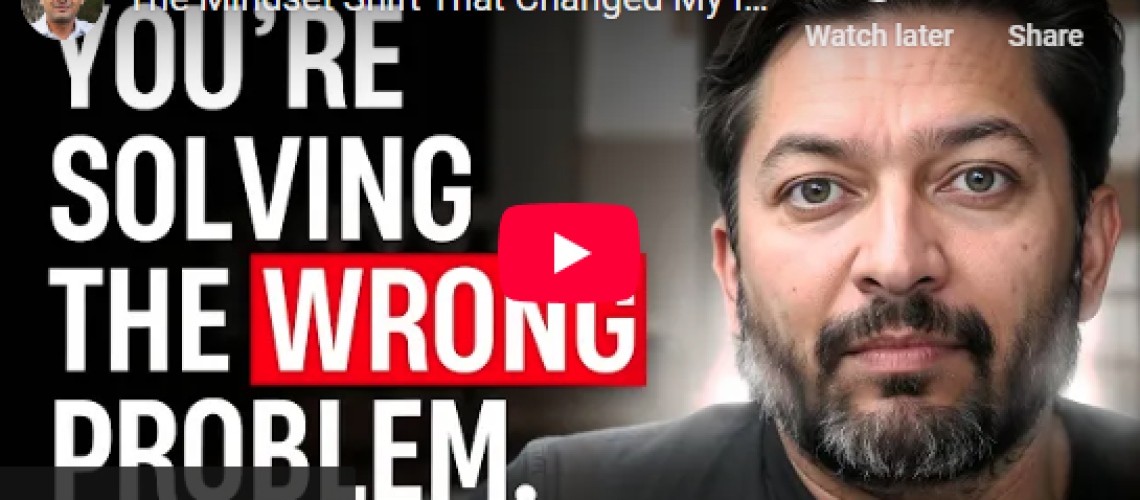

Several years ago, I attended a session by Kathy Sierra at South by Southwest in Austin. That experience completely reshaped my identity as a startup founder. Before that session, I viewed myself primarily as a technical founder focused on building software products. However, today, I see myself as much more than that. I write books, deliver keynotes, run workshops, coach others, and even create physical products. This significant pivot in my perspective not only changed how I define myself but also altered the trajectory of my startup and its business model. I believe this is a crucial shift that every startup founder should consider.
From Solution-Centric to Outcome-Focused
At the time of attending Kathy’s session, I was at a crossroads with my early-stage software startup. My blog, which began as a personal accountability tool and a means to clarify my thoughts on products and entrepreneurship, started consuming more of my time. One particular blog post had gained unexpected traction, showcasing an early version of the Lean Canvas—a one-page business modelling template I created as a remix of the Business Model Canvas by Alex Osterwalder. The feedback was overwhelming, and I began to wonder if I should offer it as a SaaS product.
Despite my advisors’ concerns that pursuing this idea might distract me from my core startup product, I felt an instinctive pull towards it. They raised valid points: there was no guarantee that people would find the canvas useful enough to pay for it, and it was uncertain whether users would continue using it over time. Despite agreeing with their reservations, I couldn’t shake the feeling that there was something valuable here, but I needed clarity on how to move forward.
Then came Kathy’s session, where she introduced a concept that resonated deeply with me: every product exists in two contexts. On one hand, there’s the tool or solution context, where the product’s features reside. On the other, there’s the bigger and more compelling context that focuses on customer outcomes. This shift in perspective is pivotal. As she stated, instead of asking, “How can I make a better product?” we should be asking, “How can I make a better user of this product?”
Defining the Bigger Context
Kathy illustrated her point with a powerful analogy. When a photographer wants to impress someone, they don’t talk about being the best tripod expert—they showcase their photographs. In this case, tripods and cameras exist in the solution context, while photography is the bigger context. Here, the features of your product are secondary to the outcomes your customers desire.
She posed a thought-provoking prompt: “Don’t make a better X, make a better user of X.” For instance, if you’re a camera manufacturer, your goal should not be to make a better camera but to make a better photographer. This shift in focus can lead to innovative insights. You might decide to offer photography courses, which would enhance users’ skills without changing the camera features. Once they become better photographers, they will likely invest in more cameras and accessories from you.
Alternatively, you could simplify camera usage, making it accessible to everyone. While traditional camera brands focused on adding complex features, Apple entered the market and revolutionized photography with the smartphone. They made it easy for anyone to take stunning photos without needing to understand intricate settings. This shift not only disrupted the camera industry but also transformed how people perceive photography.
The Benefits of Focusing on User Outcomes
Shifting the focus from product features to user outcomes offers three significant benefits:
- Defining the Hero: The hero of your product story isn’t your product or you; it’s your customer. Understanding their journey is crucial.
- Transforming Ordinary Users into Heroes: Your role is to create something that elevates ordinary customers into superheroes. This transformation is where true value lies.
- Transcending Product Categories: By focusing on customer outcomes, you can move beyond your product category and tap into a more compelling narrative.
For instance, a camera company can offer photography training, illustrating that focusing on user outcomes can redefine your business model. This perspective shift led to my own mini-epiphany as I applied it to my startup.
Rethinking My Startup’s Identity
At the time, I was developing software for transferring large files. However, as I contemplated the prompt, “Don’t make a better file-sharing product, make a better blank,” I found myself stuck. I knew my primary customers were wedding photographers who needed to manage large files post-shoot, but I lacked passion for the photography industry. This realization illuminated my disconnect: I was more invested in the technology than in understanding my customers’ broader context.
This prompted a crucial decision: I needed to either find a cofounder passionate about photography or pivot entirely. Ultimately, I chose the latter, a challenging choice that required reevaluation of my path.
Understanding Early-Stage Startup Challenges
To redefine my startup’s mission, I applied Kathy’s prompt to my Lean Canvas product: “Don’t make a better Business Model Canvas, make a better startup founder.” This led me to explore the challenges early-stage founders face and how I could help. I interviewed my blog readers to gain insights into their struggles and how they envisioned the Lean Canvas fitting into their picture.
What struck me was that no one cared about the tool’s online presence or the features I envisioned. Instead, they wanted a clear, step-by-step framework to help them transform their big ideas into viable business models. This revelation shifted my approach; I didn’t need to build software to deliver value. Instead, I organized a one-day paid workshop demonstrating how I used the Lean Canvas in my startup.
From Ideas to Workshops
During these workshops, I used printouts of the Lean Canvas template instead of software. This approach allowed me to gather immediate feedback and observe how participants interacted with the canvas. It was during this process that I discovered the concept of a “concierge MVP”—becoming the product and offering value through a service. This method provided a faster learning curve than creating a fully-fledged product upfront.
Using printouts, I could iterate quickly based on user interactions. For example, I asked participants to create their first snapshot of the canvas within twenty minutes without instructions, observing where they struggled. This iterative process allowed me to refine the Lean Canvas, enhancing its usability based on real feedback.
Transforming Feedback into Action
Once I had a version that consistently worked, I transitioned from paper prototypes to a software tool. But even then, I didn’t just offer the tool; I created supplementary resources. I turned the workshop content into a book, Running Lean, which guides founders on using the Lean Canvas to iterate from concept to product-market fit. I also developed simple courses to complement the book.
Writing a book is an enormous undertaking, so I applied a similar iterative testing approach before writing it. If you’re curious about that journey, you can check out this video detailing how I crafted a best-selling book through a lean methodology.
Going All In with Lean Stack
By this point, I was balancing my original startup and these new projects. Once I validated that there was sufficient demand for these products, I made the bold decision to sell my original startup and fully commit to helping founders through a new company called Lean Stack. I consciously avoided naming it Lean Canvas, as I didn’t want to limit our mission to a single tool.
As time passed, more tools emerged, additional books were written, and a series of step-by-step playbooks took shape. Reflecting on Kathy’s prompt again, I simplified it to just “make better startup founders.” This understanding of our true product at Lean Stack evolved organically, driven by the mission to empower entrepreneurs.
Conclusion: Embrace the Mindset Shift
My journey has taught me that product optimization resides in the solution context, focused on enhancing features. In contrast, product innovation takes place in the bigger context, where we seek different and better outcomes. This mindset shift is crucial for standing out as a startup founder.
As you embark on your entrepreneurial journey, I encourage you to consider this perspective. Embracing a focus on customer outcomes over mere product features can unlock new opportunities and lead to lasting success. If you’re interested in learning more about early-stage strategies, consider subscribing to The LEAN 1-2-3 Newsletter by Ash Maurya, where I share insights and actionable tactics weekly.