The ECCSA approach
Build the capability your organisation needs
for what comes next.
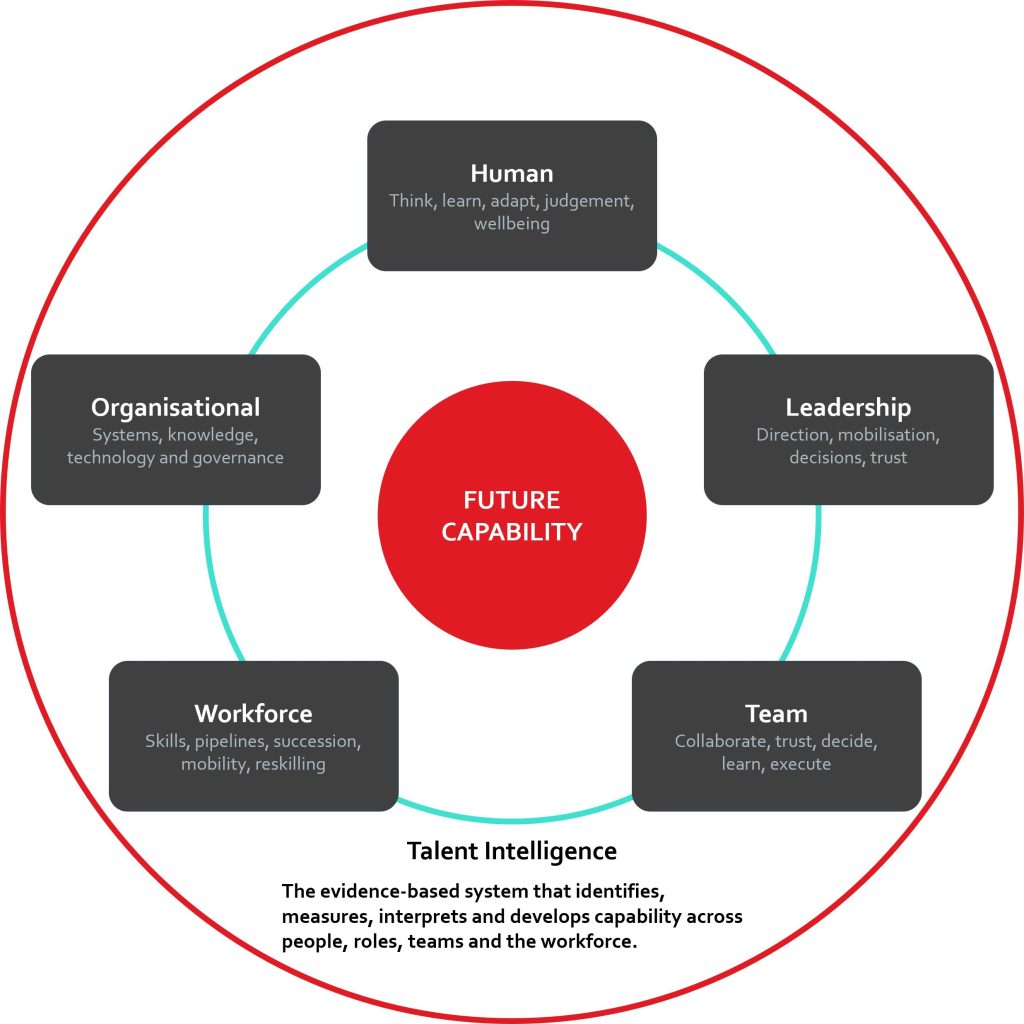
Future Capability is Esterhuizen Coaching and Consulting’s (ECCSA) integrated approach to helping organisations identify, build, configure, renew and sustain the human, leadership, team, workforce and organisational capabilities required to adapt, perform and create sustainable value under changing conditions.
Why Future Capability matters
Today’s strengths do not automatically become
tomorrow’s capability.
Organisations may have talented people, experienced leaders, valuable knowledge and advanced technology, yet still struggle to configure and mobilise these resources into sufficiently reliable performance under changing conditions.
Future Capability focuses on what the organisation must be able to do, which capabilities will make this possible, how those capabilities must be configured and how they will be sustained and renewed as conditions change.
Capability is more than potential, competence, resources or one successful performance event.
It is the sufficiently reliable ability to achieve intended outcomes in context.
ECCSA working definition
Future Capability
The evolving set and configuration of capabilities required by an actor, organisation or system to remain effective under anticipated, emerging or materially changing future conditions.
The ECCSA Future Capability Architecture
How Future Capability creates sustainable value
ECCSA positions Future Capability within a connected value pathway. Purpose establishes direction, Talent Intelligence strengthens people and workforce decisions, and the five capability domains enable better judgement, adaptive performance and sustainable value.
This pathway is not a rigid sequence. Its elements interact continuously as the organisation learns, adapts and renews its capabilities.
Five interconnected domains
Where capability is built
ECCSA focuses on five distinct but interconnected capability domains. They are not a simple hierarchy, and strength in one domain does not automatically create capability in another. Sustainable organisational performance depends on how these capabilities interact and reinforce one another.
Human Capability
The reliable individual ability to apply knowledge, competencies, experience and judgement to achieve intended outcomes and adapt when conditions change.
Leadership Capability
The individual and collective ability to create direction, enable alignment, exercise judgement and mobilise people towards shared outcomes.
Team Capability
The emergent collective ability of an interdependent group to integrate contributions, coordinate action, adapt and achieve shared outcomes.
Workforce Capability
The organisational ability to access, configure, deploy and sustain the collective human capability needed in the right forms, places and times.
Organisational Capability
The socio-technical ability to integrate people, knowledge, systems, technology, resources and governance to achieve and renew organisational outcomes.
Cross-cutting intelligence
Better capability decisions require better intelligence
Talent Intelligence is the primary cross-cutting engine within ECCSA’s Future Capability Architecture. It brings together valid evidence about people, roles, potential, readiness, performance and context to improve consequential talent, succession, leadership and workforce decisions.
Talent Intelligence
Understand who can contribute what capability.
Talent Intelligence helps organisations understand the capabilities they require, the potential and readiness available within their workforce, where material gaps or risks exist and which decisions will strengthen future capability.
- Define the decision
- Gather evidence
- Interpret context
- Exercise judgement
- Review outcomes
The capability-building journey
From business challenge to sustainable capability
ECCSA begins with the business outcome and operating context, not with a predetermined service or intervention.
Clarify
Define the challenge, intended outcome and context.
Specify
Identify the capabilities required and the relevant human, leadership, team, workforce or organisational domains.
Assess
Gather valid, proportionate and context-relevant evidence.
Prioritise
Determine what must be retained, strengthened, built, accessed, reconfigured, renewed or retired.
Develop
Apply consulting, coaching, assessment and development interventions.
Renew
Review outcomes, learn, sustain and adapt capability over time.
What this means in practice
Future Capability connects strategy to action
The framework helps ECCSA integrate services around the organisation’s real capability needs.
Leadership and succession
- Clarify future leadership requirements
- Assess readiness and development needs
- Build stronger leadership pipelines
- Support executive judgement and transition
Talent and workforce decisions
- Improve selection and development decisions
- Understand capability gaps and risks
- Strengthen talent management and succession
- Prepare the workforce for changing requirements
- Align talent and workforce decisions with future strategic requirements
Teams and organisations
- Improve collective coordination and performance
- Strengthen collective adaptability and organisational resilience
- Configure people, knowledge, systems, technology and governance around the required outcomes
- Renew capabilities before they decay or become obsolete
Evidence and accountability
Assessment informs capability decisions. It does not replace judgement
ECCSA does not treat one test, score, qualification or performance event as proof of complete capability. Capability is inferred from a governed body of relevant evidence considered in relation to a defined actor, intended outcome, operating context and decision.
Human accountability remains essential, especially where decisions affect careers, leadership, succession or organisational risk.
Technology and artificial intelligence can strengthen analysis and reveal important patterns, but they do not replace contextual understanding, ethical accountability or human judgement.
Potential evidence
Abilities, attributes, knowledge and psychometric constructs.
Configuration evidence
How people, roles, resources and enabling conditions are arranged.
Enactment evidence
How capability is applied in real work and decisions.
Outcome and renewal evidence
Results, learning, adaptation and continued relevance over time.
THINK Future
Strengthen future-oriented judgement
Explore THINK FUTURE, ECCSA’s developing framework for thoughtful questioning, human judgement, information validation, navigating complexity and knowledge integration.
Begin with the outcome
What must your organisation be able to do next?
A Discovery Session helps clarify the outcome your organisation needs, identify the capabilities required and determine the most appropriate combination of Talent Intelligence, consulting, coaching, assessment and development.
FAQ
What is Future Capability?
Future Capability is an organisation’s ability to adapt, perform and create sustainable value as its environment, strategy, workforce and technology change.
ECCSA’s Future Capability framework considers five interconnected domains:
- Human Capability
- Leadership Capability
- Team Capability
- Workforce Capability
- Organisational Capability
These domains help organisations consider whether their people, leaders, teams, workforce and organisational systems are ready and able to deliver what the organisation will require next.
Future Capability is not a single programme or fixed end state. It must continue to develop as organisational priorities and operating conditions change.
Why does Future Capability matter?
A strategy can only create value when people and the organisation have the capability to execute it.
Leadership transitions, scarce skills, changing employee expectations, technological developments and AI-enabled work can create new capability requirements. Existing roles, skills, decision processes and development pathways may not remain sufficient as these requirements change.
Building Future Capability helps an organisation identify what it must become capable of doing, where material gaps or risks may exist and which people, leadership, team, workforce or organisational capabilities require attention.
The appropriate response depends on the organisation’s strategy, context, evidence and readiness for implementation.
What are ECCSA’s five Future Capability domains?
ECCSA considers Future Capability across five interconnected domains:
- Human Capability
The judgement, adaptability, self-awareness, resilience, learning and human skills people need to contribute meaningfully and perform sustainably. - Leadership Capability
The ability of leaders to exercise sound judgement, provide direction, build trust, navigate complexity and mobilise people around organisational priorities. - Team Capability
The collective ability of teams to collaborate, make decisions, manage constructive conflict, learn and execute effectively. - Workforce Capability
The organisation’s ability to understand its present and future talent requirements, make responsible talent decisions, develop critical skills and strengthen succession readiness. - Organisational Capability
The systems, structures, culture, processes and ways of working that enable the organisation to translate strategy into coordinated and sustainable performance.
The domains are considered together because weakness or misalignment in one domain can affect the others.
How does ECCSA help organisations build Future Capability?
ECCSA begins with the organisation’s context rather than a predetermined programme.
We explore what is changing, what the organisation needs to achieve, what it must become capable of doing and where stronger evidence, alignment or development may help.
Depending on the recognised need, ECCSA may draw on:
- Talent Intelligence
- Coaching
- Management Consulting
- Organisation Development
- Evidence-based Insight
These methods may be translated into proportionate interventions such as psychometric assessments, executive coaching, leadership development, team coaching, succession planning, talent management, organisational development, culture and change support, Enneagram development, Mental Toughness development or learning programmes.
The final pathway depends on the organisation’s objectives, context, available evidence, stakeholder commitment and implementation capacity.
Does ECCSA offer individual services or only organisational programmes?
ECCSA works primarily with organisations, leaders and teams, while continuing to offer selected services to individuals.
Organisational engagements may include leadership development, executive coaching, team coaching, talent assessment, succession planning, management consulting and organisation development.
Individual services may include executive or career coaching, psychometric assessments, Enneagram development and Mental Toughness coaching.
Where an organisation is the client, the engagement is designed around the organisation’s objectives while respecting professional ethics, confidentiality, informed consent and the rights of individual participants.
What makes ECCSA’s approach different?
ECCSA connects purpose, evidence and capability rather than treating assessments, coaching, consulting or development as isolated services.
Our multidisciplinary approach brings together industrial psychology, coaching, management consulting, systems thinking, engineering and practical organisational experience. This enables ECCSA to consider both the human and organisational factors influencing performance.
ECCSA does not assume that one assessment, workshop or coaching engagement will transform an organisation. We work with clients to identify a proportionate pathway suited to the recognised need, organisational context and available evidence.
ECCSA’s approach should not be interpreted as a guarantee of a particular organisational, financial, employment or individual outcome. Results also depend on factors such as leadership commitment, organisational conditions, implementation quality and sustained action.
What is the ECCSA Change Drumbeat approach?
The Change Drumbeat is ECCSA’s approach to treating organisational change and capability development as an ongoing rhythm rather than a once-off event.
It encourages organisations to maintain alignment between purpose, strategy, leadership, people, learning, communication and execution as conditions change.
The specific rhythm and activities are adapted to the organisation’s context. They may include leadership conversations, capability reviews, stakeholder engagement, learning, coaching, feedback and implementation support.
The Change Drumbeat does not replace established change-management or project-governance methods. It provides a practical way to sustain attention, learning and alignment throughout implementation.
What happens during a free discovery session?
The discovery session is an initial conversation about the capability challenge or organisational priority you are facing.
You do not need to arrive with a fully defined programme. We will explore:
- What is changing in your organisation
- What the organisation needs to achieve
- Which capability challenges appear most relevant
- Who is affected by the challenge
- What evidence or information is already available
- Whether ECCSA’s capabilities are relevant to the need
- What an appropriate next step could be
The session is exploratory and does not diagnose the organisation or commit you to an ECCSA engagement. Where ECCSA is not the appropriate provider, we will say so.
Book a Free Discovery Session
Related Articles
You may also find these articles valuable.
Handpicked content to help you reflect, grow, and take the next step.