
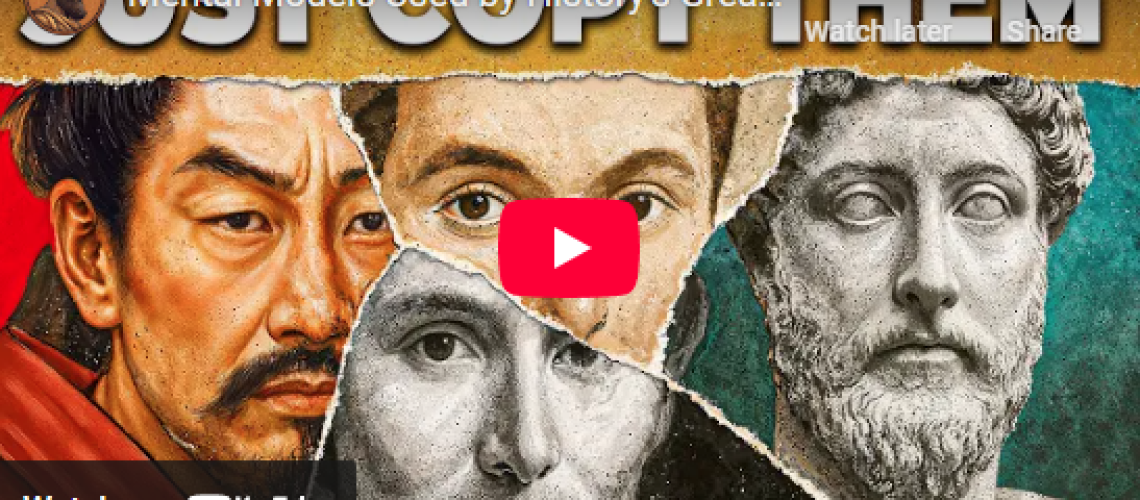

Mental models are the hidden advantages that have guided some of history’s greatest thinkers through the most complex challenges. These frameworks helped samurai warriors, philosophers, and military strategists navigate their respective fields with clarity and precision. In this post, we will explore four powerful mental models that can transform how you approach decision-making and problem-solving in your life.
The Empty Mind Model
Let’s kick things off with a fascinating insight from Miyamoto Musashi, a legendary samurai known for his unmatched combat skills. Musashi faced life-or-death situations where hesitation could lead to his demise. He discovered that the problem wasn’t about having too little knowledge; it was about overthinking. This realisation led him to develop the empty mind model, which emphasises clarity of thought over complexity.
In Musashi’s most renowned duel, he arrived late, crafted a wooden sword from a boat oar, and defeated a highly skilled opponent who had honed complex techniques for years. The key to his victory? He emptied his mind of unnecessary thoughts and acted without hesitation. This mental model helps you process information effortlessly, just like how you instinctively react to sudden dangers.
Here’s how to apply the empty mind model:
- Recognise when your thoughts are spiralling out of control.
- Let go of outcomes that are beyond your control.
- Focus on the present moment.
- Act decisively without overthinking.
Musashi wrote, “The true void is where nothing exists.” By understanding what exists, you can also comprehend what does not exist, which leads to mental clarity. This model teaches us that the hardest decisions become clear when we stop rehearsing endless possibilities.
The Dichotomy of Control
Next up is Marcus Aurelius, the stoic philosopher and Roman Emperor who faced countless crises, from plagues to political betrayals. Despite the chaos around him, he remained unshakeable. How did he achieve this? Through the dichotomy of control, a framework that distinguishes between what you can control and what you cannot.
Most people waste their energy on things they cannot change—traffic, others’ opinions, or economic conditions. This misplaced focus can lead to feelings of powerlessness. Marcus emphasised that you have power over your mind, not external events. Recognising this empowers you to redirect your focus to what truly matters: your judgments, actions, and responses.
Here’s how to put the dichotomy of control into practice:
- Identify what you can control: your preparation, your responses, and your mindset.
- Stop stressing about the outcome of events that are beyond your influence.
- Channel your energy into factors that you can actually influence.
Imagine you’re in a crucial meeting where your proposal might be rejected. Instead of obsessing over the outcome, focus on the quality of your preparation and the clarity of your presentation. This shift in mindset can dramatically reduce anxiety and increase effectiveness.
Strategic Positioning
Now, let’s shift gears to Sun Tzu, the legendary military strategist known for his work “The Art of War.” His insight was profound: battles are often won or lost before they even begin. Most people think that success comes from fighting harder, but Sun Tzu emphasises the importance of positioning.
Strategic positioning means arranging circumstances so that success becomes almost inevitable. Instead of exhausting yourself in uphill battles, identify positions that offer natural advantages. For example, rather than working harder as a fitness trainer, create a unique method that others can teach, allowing you to benefit from your efforts continually.
To effectively utilise strategic positioning, consider these principles:
- Understand the terrain—whether it’s in business or personal development.
- Compare possible positions before making any commitments.
- Seek positions that offer multiple advantages.
- Ensure your resources align with your chosen position.
- Move decisively once you’re positioned correctly.
This model illustrates that the difference between struggling and succeeding often comes down to your position, not just your effort. By strategically positioning yourself, you can transform challenging situations into opportunities.
The Practical Reality Model
Lastly, let’s explore Niccolò Machiavelli, a controversial figure who understood human nature in a way that many prefer to ignore. He posited that most people operate under the false assumption that the world is fair and that hard work always leads to rewards. However, reality often tells a different story.
Machiavelli’s practical reality model encourages us to see the world as it is, not as we wish it to be. This perspective helps prevent disappointment and confusion when our expectations are not met. He famously noted that a leader must learn how not to be good, using this knowledge according to necessity.
To adopt the practical reality model, follow these guidelines:
- Separate idealism from pragmatism—maintain your values while recognising that not everyone operates by the same principles.
- Prepare for both the best and worst in human behaviour.
- Understand that systems have both formal rules and unwritten ones.
This approach allows you to navigate complex human systems effectively. By seeing reality clearly, you reduce the emotional toll of disappointment and enhance your decision-making capabilities.
Bringing It All Together
These four mental models—Musashi’s empty mind, Marcus Aurelius’ dichotomy of control, Sun Tzu’s strategic positioning, and Machiavelli’s practical reality—can work in harmony to enhance your decision-making process. Musashi’s empty mind clears mental clutter, allowing Aurelius’ dichotomy of control to function effectively. Once you know what you can control, Sun Tzu’s strategic positioning shows you where to direct your efforts, while Machiavelli’s practical reality ensures you’re operating in the world as it truly exists.
By mastering these mental models, you can navigate life’s challenges with the same clarity and decisiveness that have enabled history’s greatest minds to thrive. Remember, the wisdom of the past is not merely for admiration; it’s for application in our modern lives. Embrace these frameworks, and watch how they transform your approach to decision-making and problem-solving.