
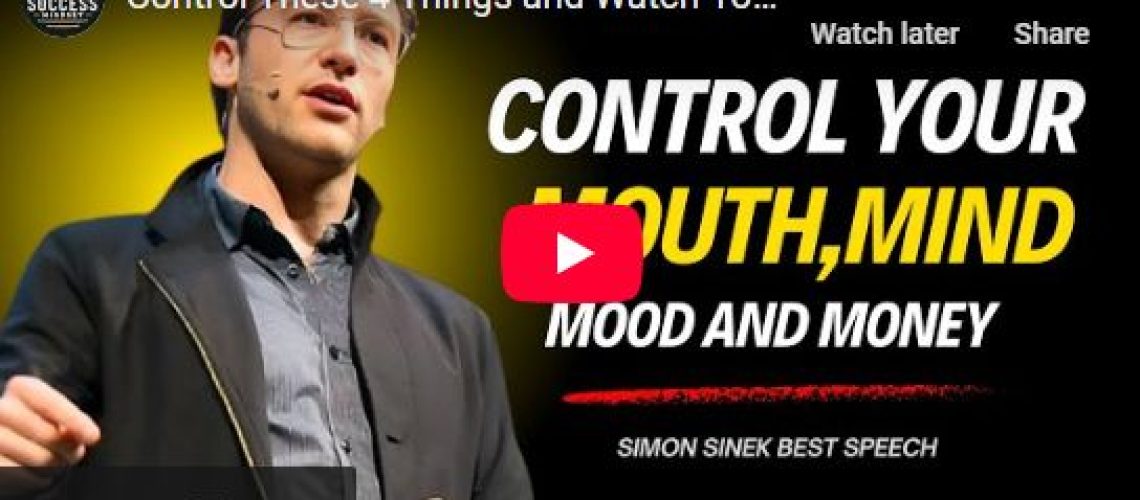

Watching this video of Simon Sinek reminded me of many discussions about self-control I’ve had during coaching. Being in control of ourselves is a significant challenge for most of us. What makes it difficult? The Enneagram reveals that our greatest strengths are also our most significant weaknesses. I believe Simon has summarised the topics that can help us increase self-control capacity. These topics are valuable to reflect on and potentially discuss in your next coaching session. I hope you find this summary as helpful as I did, and I encourage you to watch the full video.
There’s a quiet war happening inside each of us, a battle that doesn’t show on our faces or in our selfies but shapes our entire future. This war is about control: control over your mouth, mind, mood, and money. The people who master these four forces don’t just survive; they thrive. Those who don’t often find themselves trapped in cycles of regret and frustration.
In this article, we’ll break down why controlling these four areas is essential to living with intention, gaining freedom, and becoming the leader of your own life. Drawing on timeless wisdom and powerful examples, you’ll discover practical ways to take back control and watch your life transform instantly.
Control Your Mouth: Speak with Intention
Controlling your mouth might sound simple, but it’s one of the hardest things to do, especially when emotions run high or when you feel disrespected. Your words can be your greatest tool or your most dangerous weapon. Every conversation is a choice: will it be a connection or a collision?
Think back to the last time someone said something that hurt you, not because it was loud or profane, but because it was cold, dismissive, or thoughtless. Research from the Harvard Business Review reveals that negative interactions carry five times the emotional weight of positive ones. That means one careless word can take five acts of kindness to balance out.
When we’re casual with criticism but stingy with affirmation, we erode trust and chip away at safety. Honesty without empathy becomes cruelty disguised as truth. Words don’t just bounce off people; they soak in, becoming beliefs, fears, and memories.
On the other hand, words of encouragement can genuinely change lives. A single sentence, such as “I believe in you” or “I see you,” can uplift someone and empower them to face a challenging day with confidence. Leaders who control their mouths listen better than they speak. They pause before responding, ask questions before assuming, and build relationships instead of tearing them down.
In our homes, where love should be the loudest voice, softness in our tone sets the emotional temperature. Softness is not weakness; it’s strength. Raising your voice builds walls, not authority. The people closest to us often suffer the most from our careless words because we assume they’ll understand or forgive. But love is not just a feeling; it’s an action, often tested in the words we choose.
Before you speak, ask yourself three questions:
- Is it true?
- Is it necessary?
- Is it kind?
These aren’t restrictions but filters that ensure your words build bridges instead of burning them. Remember the story of the man who scattered feathers while spreading rumours and couldn’t collect them all back? That’s the nature of words; they can’t be taken back once released.
Control Your Mind: Rewire Thought Patterns
Most people move through life as passengers in their own minds, overwhelmed by fear, distraction, and negativity. They wake up consumed by worries they didn’t choose and spiral into worst-case scenarios before their day even begins. This is chaos, not insight.
Your brain was designed to keep you alive, not necessarily to make you happy. It’s wired to notice danger before opportunity, failure before success. This survival mechanism causes us to focus on what could go wrong rather than what could go right. But here’s the crucial insight: you are not your mind. You are the observer, the author of your story. You get to decide which thoughts stay in your script.
Choosing your thoughts is deciding your future. Thoughts are seeds that grow into beliefs, shaping your actions and reality. So, what are you planting?
Imagine treating your thoughts like your clothes; you wouldn’t just throw on anything; you dress with purpose. Similarly, choose thoughts that empower you and prepare you for the life you want. This takes training. Mental strength is built by feeding your mind with ideas that challenge your comfort zone, reading books that expand your perspective, and surrounding yourself with people who dream bigger and think differently.
Gratitude is a powerful tool in rewiring your mind. Not the Instagram version, but the quiet, consistent practice of noticing what’s good even when times are tough. Gratitude reminds you that pain doesn’t have to have the final word.
As a Navy SEAL famously said, “We don’t rise to the occasion; we fall to the level of our training.” Your mindset in moments of pressure reflects the habits you’ve built. Discipline, repetition, and intention are the keys to training your mind to return to hope, resilience, and strength, even when there’s no evidence yet.
Control Your Mood: Master Emotional Intelligence
Emotions are not dictators; they are messengers. They give life colour and meaning but don’t have to hijack your decisions. There’s a difference between experiencing emotions and being ruled by them. For example, anger signals something is wrong, but reacting impulsively can damage relationships. Sadness signals loss, but dwelling too long can cloud your perspective.
Emotional discipline means becoming fluent in your emotional language and reading the message before reacting to the tone. Imagine your emotions as guests at a dinner table; you are the host deciding who stays, who leaves, and who influences the evening.
Creating space to feel without reacting creates freedom. This pause, taking a breath before responding, is not a sign of weakness but rather a strategic move. It allows clarity and prevents chaos.
Emotional strength often looks like small acts: walking away from an argument you don’t need to win, holding back a sarcastic comment, or saying, “I need a moment” instead of pretending you’re fine. These build emotional fluency over time.
Many people mistakenly equate their mood with their identity (“I’m just an angry person”), but feelings are transient. Awareness of your emotional patterns, including what triggers you and what calms you, is key to resilience.
When you master your mood, you become a calm presence others trust. You respond with curiosity, not combustion, and lead with emotional wisdom, not intensity. This is emotional leadership, the kind the world desperately needs.
Control Your Money: Create Financial Freedom
Controlling your money isn’t about greed; it’s about freedom, the freedom to choose, to walk away from what doesn’t serve you, and to say yes because you’re prepared, not desperate.
Money is more than numbers; it’s meaning and priorities. Every dollar you spend votes for the life you want. Every dollar saved builds the future you’re creating. Every dollar wasted is a detour from your dreams.
Controlling your money starts with awareness, not obsession or fear. You must know where your money goes before you can tell it where to go. Real wealth isn’t about income; it’s about managing what you have with discipline.
Consider the story of a janitor who never earned more than $40,000 a year but left behind over $8 million. He played the long game, lived a simple life, avoided debt, and invested consistently.
In a world pushing “buy now, pay later” and instant gratification, ask yourself: What do you truly deserve? Momentary pleasure or lasting peace? Freedom comes from restraint, from saying “not now” so you can say “now I can” later.
Start small. Track your expenses without judgment. Build habits that serve you: use budgeting as a compass, automate savings, invest wisely, and create an emergency fund. Your financial system is either working for you or against you.
Financial control frees you from stress and distraction, enabling you to show up as your best self, more generous, focused, and present. It empowers you to dream bigger and give more.
Control Your Circle: Environment Drives Behaviour
Control is never isolated. It lives in your relationships and environment. Who you spend time with shapes who you become. It’s easy to believe you’re immune to influence, but human nature resists isolation. We mirror the attitudes, habits, and energy of those around us.
Surround yourself with people who talk about ideas, not gossip; who dream bigger, not smaller; who challenge and uplift you. These relationships multiply your ambition, discipline, and joy.
Audit your circle, not to judge but to gain clarity. Who drains your energy? Who discourages your dreams? Who challenges you to be better? Longevity doesn’t equal alignment. Sometimes, love means being selective about who gets access to your inner world.
Think of your environment like soil: even the best seed struggles in toxic soil. Rich soil nurtures growth and challenges you to grow faster.
Social science confirms that your network profoundly influences behaviours like eating, saving, and exercising. Want to be disciplined? Surround yourself with disciplined people. Want integrity? Surround yourself with honest people.
The right circle holds a mirror to your potential, reminding you who you are when you forget. It expects your success not from pressure but from deep belief. Even a small, aligned group can be more powerful than a large, disconnected crowd.
Control Your Response: Power Over Events
Life throws punches without warning. We can’t always choose what happens, but we can choose how we respond to it. This space between the event and the reaction is where our power resides.
Most people react automatically, exploding in anger or withdrawing in hurt, surrendering their power. But pausing to breathe and choose a response reclaims that power.
Imagine being cut off in traffic. Your first instinct might be rage, but if you pause, you can choose calm, grace, and control instead of collision.
Viktor Frankl, a Holocaust survivor, famously said his one freedom was to choose his attitude despite unimaginable suffering. This kind of control can’t be taken away by force or pain.
Choosing response over reaction builds character. It’s not about ignoring pain but refusing to let it define you. Every time you choose your response intentionally, you become stronger, more grounded, and someone others can count on.
This discipline isn’t glamorous. It’s the small, quiet moments: walking away from a fight you don’t need, responding with kindness when provoked, acting with integrity when betrayed.
Like athletes trained to stay focused under pressure, you can train yourself to respond with wisdom in life’s toughest moments. Your response shapes your character far more than any external circumstance.
Conclusion: Mastery Begins with Control
Control is not about domination or rigidity; it’s about discipline and being rooted in who you are. The most powerful people aren’t the loudest in the room; they’re the ones most controlled within themselves.
Control your mouth because your words create your world.
Control your mind because thoughts shape your destiny.
Control your mood because emotion without discipline is chaos.
Control your money because financial freedom starts with daily choices.
Control your circle because your environment either builds you up or breaks you down.
Control your response because power isn’t in control of events but in control of your character.
When you master these areas, you don’t just survive life; you transform it. You become the driver of your own destiny, living with intention, freedom, and peace.
If you want to dive deeper into personal growth and leadership development, consider exploring life coaching or executive coaching. For those interested in understanding how their environment influences their success, team coaching can provide valuable insights. And if you’re ready to transform your mindset and build lasting habits, check out our wellness programs.
Remember, control isn’t about perfection or never facing challenges; it’s about choosing who you want to be in every moment, no matter what life throws your way. Now it’s your turn.