
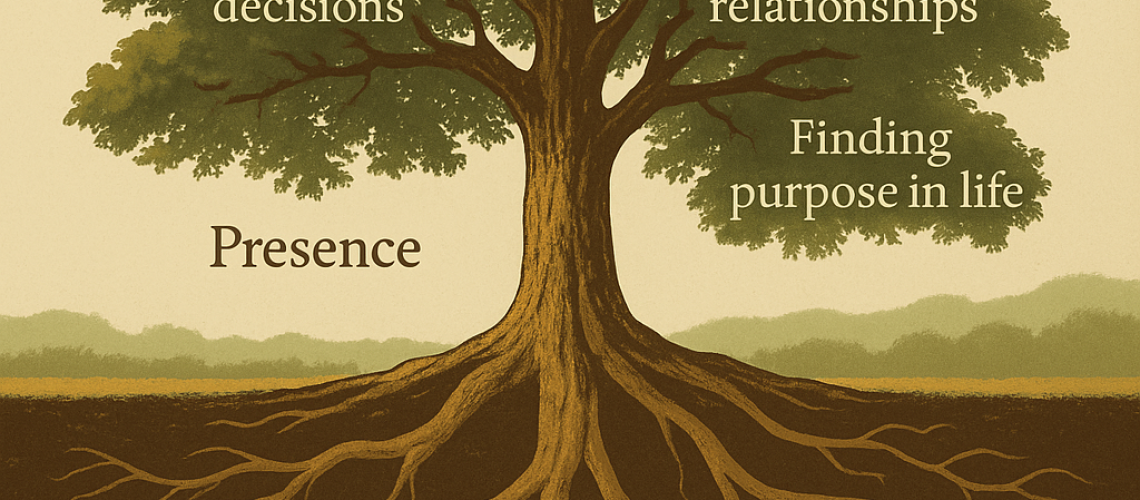

“Root Before Rise”
Deep in the Ituri rainforest of the Democratic Republic of the Congo, a newly germinated iroko (Milicia excelsa) sends two glossy leaves toward a shaft of tropical light. Visitors rarely notice the sapling, because it remains below two metres for years, almost hidden beneath dense understory. What they cannot see is the silent drama beneath the forest floor. By its third birthday, the tap-root may exceed a metre in length and two-and-a-half centimetres in thickness. Foresters have documented ten-year-old iroko saplings driving roots six to nine metres into the earth, anchoring themselves for future storms and droughts.
Around year eleven, something remarkable happens. The tree that seemed stunted suddenly gains height at more than a metre per year. By age twenty, many plantation specimens reach twenty-five metres, and mature iroko giants can top forty or fifty metres. Tourists marvel at an “overnight success”, unaware that the visible triumph is the delayed dividend of patient root work.
Humans often attempt personal growth in reverse. We chase visible achievements first and hope inner stability will catch up later. Students on an Enneagram journey of self-discovery soon learn that lasting change begins by cultivating awareness, emotional literacy, and resilience before pursuing external milestones. For leaders and teams using the Enneagram as a tool for professional development, the iroko offers a living reminder: grow down first, then grow up. This article maps the tree’s two-phase strategy onto the Enneagram journey to self-discovery, illustrating why growth is cyclical rather than linear, and provides coaching practices that help individuals transition from hidden work to visible impact.
Meet the Iroko (Milicia excelsa)
The iroko is among Africa’s most prized hardwoods. Its golden timber resists termites and decay, earning the trade name “African teak”. Ghanaian and Nigerian artisans carve it into drums and furniture, Congolese villagers boil bark infusions for fever relief, and ecologists value the tree for stabilising riverbanks and providing habitat for parrots and insects.
The iroko’s most intriguing trait is its growth strategy. Unlike pioneer species that sprint toward the canopy, iroko invests most of its first decade underground. Controlled trials by the Forest Research Institute of Ghana show juvenile trees allocating more than sixty per cent of biomass to roots during their first eight years. Only after this investment does the tree redirect its energy to growth in height. The reward is resilience. When storms snap faster-growing neighbours, iroko trunks bend and recover because the foundation is deeply engineered.
Human development follows a similar rhythm. Traits admired on the surface—executive presence, creative insight, relational charisma—rest on inner capacities that take time to mature. The Enneagram maps those capacities by describing nine core personality types, each with predictable patterns of emotion, thought, and behaviour. The map invites people to notice automatic reactions and develop choice. Without that root phase, attempts at rapid change often collapse when stress increases.
Two-Phase Growth Pattern: Root before Reach
The iroko pattern divides neatly into two phases, each offering a mirror for human development.
| Phase | Iroko Strategy | Human Parallel |
|---|---|---|
| Rooting Deep (Years 1–10) | Slow height, rapid subterranean expansion, roots find water and grip the soil | Build self-awareness, practise emotional regulation, clarify values, integrate shadow, form supportive habits |
| Reaching Up (Years 11–20+) | Rapid trunk elongation, broad canopy, efficient photosynthesis | Apply insight to leadership, communicate with empathy, make aligned decisions, and contribute beyond ego |
If you are early in your journey to self-discovery, progress may appear invisible. You might journal triggers, breathe through anxiety, or track reactive patterns in meetings. These practices may seem unimpressive next to launching a product or earning a promotion, yet they lay the groundwork for future energy. When the moment to act arrives, the groundwork yields swift and sustainable results.
Phase One – The Root Decade
The Inner Journey: Slow, Personal, Profound
Consider Sarah (name changed), a finance director who learns she is an Enneagram Type Three. At first, she feels embarrassed by her need for recognition. In coaching sessions, she lists performance goals, but her coach invites her to notice bodily tension when she fears failure. Sarah begins a daily ten-minute grounding practice and keeps a diary of self-affirmations, rather than waiting for applause. Six months later, she reports few external changes, only that she feels “less frantic on Sunday nights”.
From the outside, Sarah looks the same. Internally, she has replaced the brittle root of external validation with deeper soil of self-acceptance and emotional literacy. The tasks of this decade include:
-
Discover Core Type – identify habitual emotions and motivations.
-
Observe Automatic Reactions – notice inner chatter before it dictates behaviour.
-
Confront Core Fear – bring unconscious anxieties into conversation.
-
Build Emotional Vocabulary – name body sensations and feelings accurately.
-
Establish Inner Practices – mindfulness, breathwork, journaling, or somatic grounding.
For teams, the root decade centres on psychological safety. Members learn to name conflict styles, disclose boundaries, and recognise defensive postures. Coaching tools include values clarification, reflective listening, and somatic check-ins, which enable individuals to pause meetings when tension rises.
Coaching Insights
Coaches normalise slow progress by sharing the iroko story: “We are watering roots today.” Subtle metrics, like reduced recovery time after setbacks or improved sleep, demonstrate momentum. Clients deepen their capacity to stay present with discomfort, a prerequisite for authentic influence.
Phase Two – The Canopy Decade
From Insight to Expression
After years of quiet root-building, Sarah faces a restructuring project. Colleagues panic about layoffs, expectations multiply, and deadlines become increasingly compressed. Previously, she would have powered through and burned out, but now she pauses, breathes, and proposes a compassionate strategy. Her presentations become calmer, she discloses decision criteria, and her division hits revenue targets without overtime. Employee engagement rises, and peers ask how she “became so grounded”.
Sarah has entered her canopy decade. When inner work converges with opportunity, external results compound quickly. Common markers of this phase include:
-
Clarity in Leadership – choices flow from core values rather than image management.
-
Constructive Conflict – dialogue centres on shared responsibility.
-
Integrated Intelligence Centres – head, heart, and gut information guides action.
-
Aligned Purpose – individuals who once searched desperately to find purpose in life now live purpose naturally.
Enneagram Professional Development in Action
For teams, canopy work might involve innovation labs, customer co-creation, or mentorship programmes. Coaches use stakeholder maps tied to type triggers, leadership-presence rehearsals, and visioning exercises that align organisational strategy with personal calling.
When setbacks occur, the root system proves its worth. Resilient teams reflect, adjust, and safeguard trust, like a tall iroko that flexes in a gale and rebounds upright.
The Cyclical Truth: Growth Spirals, It Does Not March
Although the iroko’s story reads like a two-act drama, growth is never a straight ascent. Each new branch requires deeper roots. Likewise, every promotion, parenting milestone, or market shock invites us to revisit earlier lessons.
Common spiral moments include:
-
Crisis Regression – a seasoned Type Eight executive meets a legal battle and notices old aggressive habits. She returns to empathy practice.
-
Purpose Drift – a social entrepreneur realises success has diluted his mission, so he schedules a solo retreat.
-
Team Inflexion – a start-up grows from ten to fifty staff and communication frays, prompting a refresher on Enneagram conflict styles.
The iroko metaphor reframes such returns as opportunities for progress, not failures.
Practical Coaching Applications
Reflection Prompt
“Where am I in my iroko cycle, rooting or rising, and what evidence do I see?”
Clients create two columns: root indicators (inner calm, heightened awareness) and canopy indicators (visible impact, creative energy). Balancing the lists calibrates expectations.
Team Workshop: Root-and-Canopy Mapping
Time: 40 minutes
Materials: Flipchart with a tree sketch, sticky notes, markers.
-
Root Notes – team members write one grounding habit each.
-
Canopy Notes – they write one visible contribution each.
-
Place Notes – stick root notes below soil, canopy notes above.
-
Debrief – discuss whether roots support the canopy, identify gaps.
Reframing Progress
When clients crave quick wins, remind them, “Strong roots support tall trees”. Highlight hidden benefits, such as improved sleep or faster conflict resolution.
Sustaining Purpose
Even mature leaders must renew their purpose. Introduce the phrase: Finding purpose in life is a lifelong journey. Encourage quarterly reflection rituals.
Key Takeaways
-
Deep work first – transformation begins underground.
-
Growth follows seasons – expect rooting, rising, and renewal.
-
Purpose relies on roots – grounded purpose endures and inspires.
Closing Invitation
The iroko does not apologise for ten years of hidden growth, nor does it boast when it finally towers over the canopy. It simply honours the wisdom programmed into its fibres. As travellers on the Enneagram journey of self-discovery, we are invited to do likewise: respect the hidden, invest in foundations, trust that authentic growth will rise in season, and allow purpose to blossom from grounded presence.
Reference List
-
Orwa et al. (2009). Agroforestry Database 4.0. World Agroforestry Centre.
-
CABI Compendium (2021). Milicia excelsa profile.
-
Riso & Hudson (1999). The Wisdom of the Enneagram.
-
Chestnut (2013). The Complete Enneagram.
-
Integrative9 Solutions. iEQ9 Practitioner Guides.
-
Hall (2005). Meta-Coaching Series.
-
Brown (2018). Dare to Lead.
-
Scharmer (2009). Theory U.